Midway through life, Good Friday 1300
Dante Lost in the Dark Forest
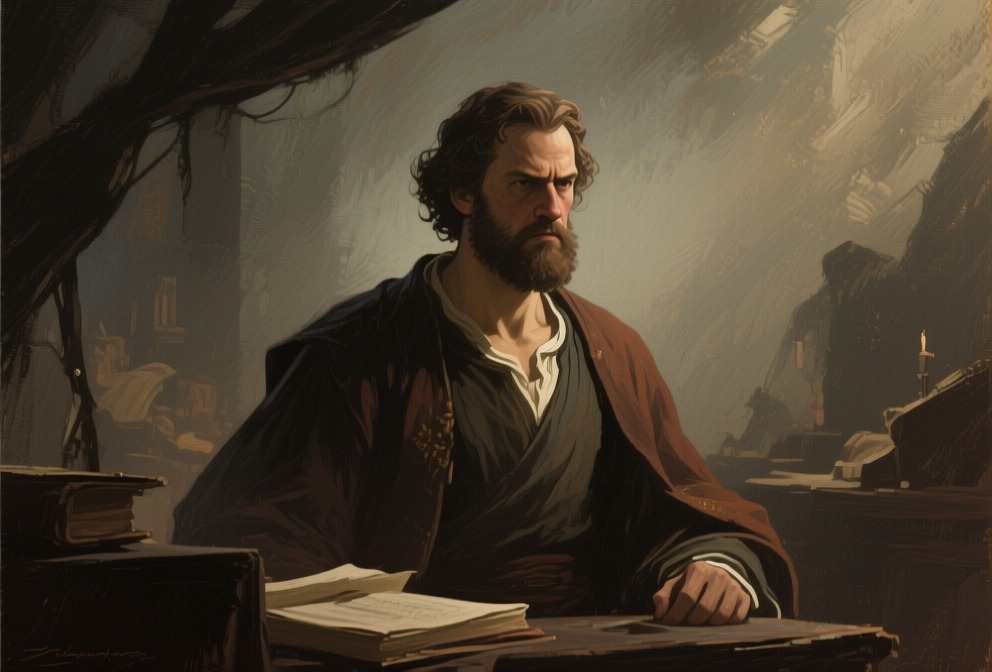
Midway upon the journey of his life, Dante finds himself lost in a dark, savage forest, having abandoned the straight path. The fear and terror of this place are so great that death itself seems little more bitter. He cannot recall how he entered, so full of slumber was he at the moment he left the true way. After a night of piteous wandering, he reaches the foot of a hill whose shoulders are already clothed with the rays of the planet that leads men right by every road. His fear is somewhat quieted, and he looks back at the pass that never yet left a living person alive. After resting his weary body, he begins to climb the desert slope, but his way is impeded by three beasts: a swift and spotted panther, a ravenous lion with head uplifted, and a she-wolf laden with all hungerings. The she-wolf drives him back toward the dark valley where the sun is silent. This opening scene establishes the allegorical framework of the entire poem: the soul's journey from sin to salvation, with the dark forest representing worldly error and the sunlit hill representing spiritual perfection.
Early morning, Good Friday 1300
Virgil Appears and Offers Guidance
As Dante retreats before the she-wolf, a figure appears before him, seeming faint from long silence. Dante cries out for pity, and the shade reveals himself as Virgil, the Roman poet born 'sub Julio' who sang of the just son of Anchises, Aeneas. Virgil explains that the she-wolf will allow no one to pass her way until the Greyhound comes who shall hunt her back to Hell. He offers to guide Dante through the eternal place, where he will hear the desperate lamentations of the damned and see those who are contented in the fire because they hope to come to the blessed people. Beyond that, a worthier soul—Beatrice—will lead him to see God. Dante, recognizing Virgil as his master and the source of his beautiful style, eagerly accepts the offer, and Virgil moves on, with Dante following behind. This encounter establishes Virgil as the embodiment of human reason and classical wisdom, the necessary first guide on the journey to salvation.
Evening of Good Friday 1300
Dante's Doubt and the Three Ladies Benedight
As night falls, Dante hesitates, questioning his own worthiness for the journey. He recalls that Aeneas and Paul were granted such a voyage for the salvation of Rome and the Faith, but he is neither Aeneas nor Paul, and fears his coming may be ill-advised. Virgil rebukes his cowardice, explaining that three blessed Ladies in Heaven have interceded for him. The Virgin Mary, moved by compassion, asked Lucia to aid Dante, and Lucia in turn went to Beatrice, who descended to Limbo to beg Virgil's help. Beatrice's shining eyes and angelic voice moved Virgil to come swiftly. Hearing this, Dante's courage returns like flowers that close at night and open with the sun. He declares one will unites them, and they enter on the deep and savage way. This episode establishes the theological framework of the journey: it is not Dante's own merit but divine grace, mediated by the Virgin, Lucia, and Beatrice, that makes the journey possible.
Evening of Good Friday 1300
The Gate of Hell and the Neutrals
Dante and Virgil arrive at the Gate of Hell, bearing the dread inscription: 'Through me the way is to the city dolent; through me the way is to eternal dole; through me the way among the people lost. All hope abandon, ye who enter in.' Virgil urges Dante to cast out all fear and cowardice, and leads him inside. They hear sighs, complaints, and ululations resounding through the starless air. Virgil explains that these are the souls of those who lived without infamy or praise—the neutrals, who were neither faithful nor rebellious to God, and are now stung by gadflies and hornets, chasing a whirling banner forever. Among them Dante recognizes the shade of him who made the great refusal, likely Pope Celestine V. This first encounter with the damned establishes the principle of contrapasso: the neutrals, who never chose a side in life, are now forever denied a fixed place, chasing a banner that never stops.
Evening of Good Friday 1300
The Crossing of the Acheron and Charon
Dante and Virgil reach the bank of the river Acheron, where a crowd of souls waits to be ferried across. The demon Charon, an old man with wheels of flame around his eyes, cries out in fury at the sight of a living soul, telling Dante he must go by another way. Virgil silences him with the words: 'It is so willed there where is power to do that which is willed.' The souls of the damned, naked and weary, curse God and their progenitors as they board the boat. Charon beats with his oar whoever lags behind. As they depart, the earth trembles, a vermilion light flashes, and Dante falls into a swoon. This crossing marks the definitive passage from the world of the living into the realm of the dead, and Charon's role as the ferryman of the damned is established.
Late evening, Good Friday 1300
The First Circle: Limbo and the Noble Castle
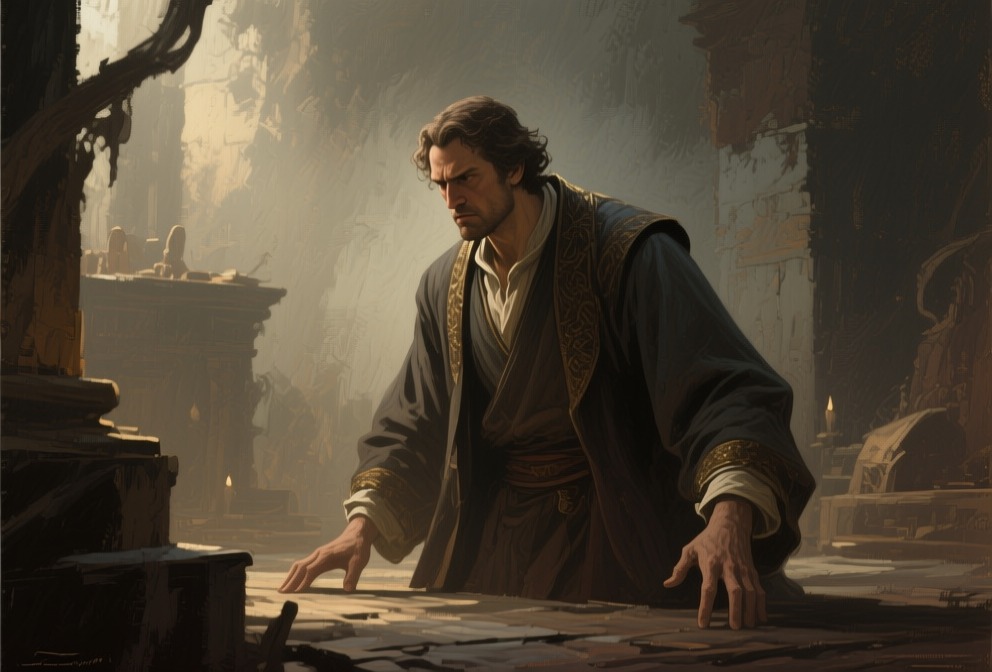
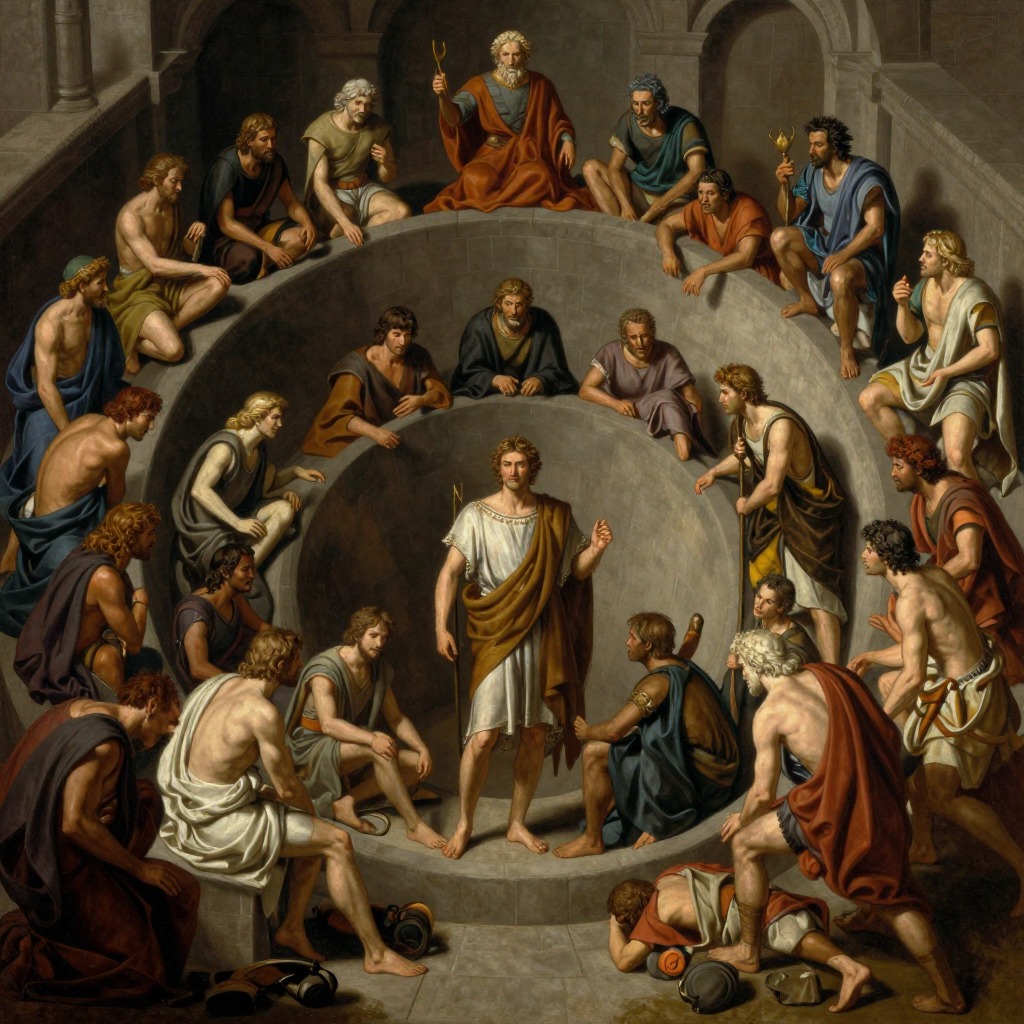
Dante awakens to a heavy thunder and finds himself on the verge of the abysmal valley. Virgil leads him into the first circle, Limbo, where the only lamentations are sighs arising from sorrow without torment. Here dwell the virtuous pagans and unbaptized infants who lived before Christianity or without baptism. They are not punished but live in desire without hope. Virgil himself resides here. Dante sees a fire overcoming a hemisphere of darkness, and approaches a noble castle surrounded by seven walls and a fair rivulet. Within, he meets the great poets Homer, Horace, Ovid, and Lucan, who welcome him as one of their own. They enter the castle and see the mighty spirits of antiquity: Electra, Hector, Aeneas, Caesar, Camilla, and the philosophers Socrates, Plato, Aristotle, and many others. This encounter establishes the dignity of classical virtue and reason, while also showing its ultimate limitation: without faith, even the noblest souls cannot attain salvation.
Late evening, Good Friday 1300
The Second Circle: Minos and the Carnal Sinners
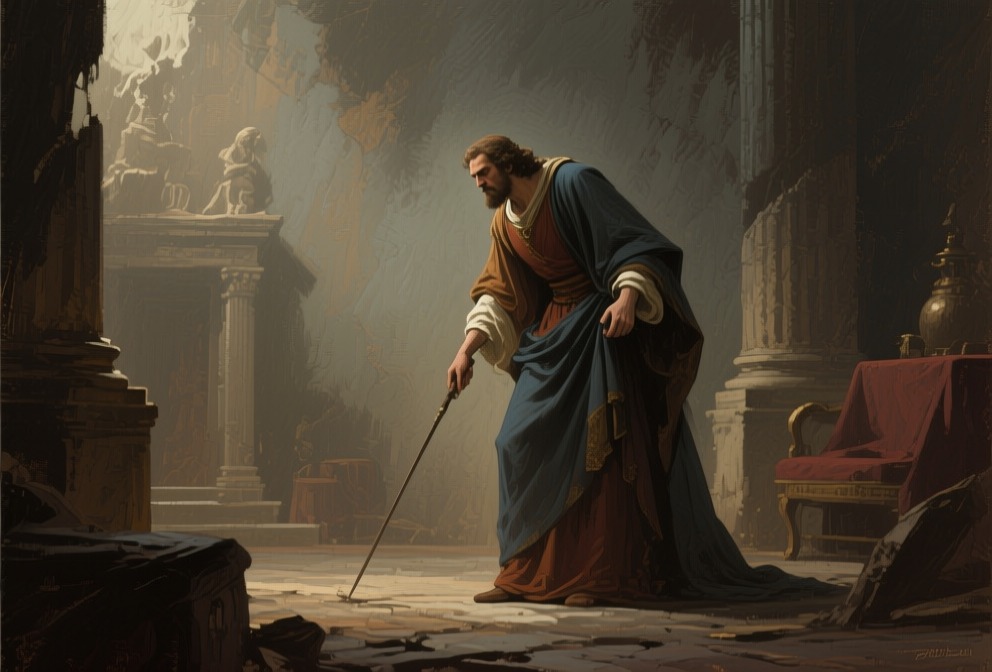
Dante descends to the second circle, where the infernal hurricane forever drives the souls of the carnal sinners who subjugated reason to appetite. At the entrance stands Minos, the infernal judge, who snarls horribly and wraps his tail around himself as many times as the grades the soul must descend. He warns Dante to beware how he enters, but Virgil again silences him with the fate-ordained formula. The souls are tossed and smitten by the blast, without hope of repose. Among them Dante sees Semiramis, Dido, Cleopatra, Helen, Achilles, Paris, and Tristan. He is moved by pity and asks to speak with two who go together, light upon the wind. These are Paolo and Francesca da Rimini. Francesca tells the story of their love, kindled by reading the tale of Lancelot and Guinevere, and how they were killed by her husband. Dante is so overcome with pity that he swoons and falls like a dead body. This episode is one of the most famous in the Inferno, exploring the power of love and the tragedy of sin.
Late evening, Good Friday 1300
The Third Circle: Cerberus and Ciacco
Dante awakens in the third circle, where the gluttonous are punished by a ceaseless rain of hail, snow, and filthy water. The three-headed monster Cerberus barks over the submerged souls, rending and flaying them. Virgil throws handfuls of earth into Cerberus's gullets to quiet him. Among the souls, Dante recognizes the Florentine Ciacco, who sits upright. Ciacco explains that he is punished for gluttony and prophesies the future of Florence: after long contention, the White Guelphs will drive out the Blacks, but within three suns the Blacks will return and oppress the Whites. He names the just as two, but they are not understood. Dante asks about Farinata, Tegghiaio, and other worthy men, and Ciacco tells him they are among the blacker souls in deeper circles. This episode introduces political prophecy and the theme of Florence's internal strife, which will recur throughout the poem.
Late evening, Good Friday 1300
The Fourth Circle: Plutus and the Avaricious
Dante and Virgil descend to the fourth circle, where the avaricious and the prodigal are punished. The demon Plutus, guardian of this circle, cries out gibberish, but Virgil silences him by invoking the will of Heaven. The sinners are divided into two groups, rolling great weights with their chests, clashing together and then turning back, crying 'Why keepest?' and 'Why squanderest thou?' Many are clerics, popes, and cardinals, their shaven crowns visible. Virgil explains that they were blind to true measure in life and are now forever locked in this futile struggle. He then delivers a discourse on Fortune, describing her as a minister of God who distributes worldly goods according to divine will, and who is blissful and hears not the curses of men. This episode introduces the concept of Fortune as a divine instrument and condemns the misuse of material wealth.
Late evening, Good Friday 1300
The Fifth Circle: The Styx and Filippo Argenti
Dante and Virgil cross the marsh of Styx, where the wrathful and the sullen are punished. The wrathful strike and tear each other on the surface, while the sullen, fixed in the mire, gurgle a hymn of their own bitterness. They approach a tower, and two flamelets signal the approach of Phlegyas, who ferries them across the Styx in his boat. During the crossing, the muddy soul of Filippo Argenti rises and challenges Dante. Dante recognizes him and wishes to see him tormented further; Virgil embraces Dante and blesses his disdain. The other souls in the mire tear Argenti apart. They then arrive at the gate of the City of Dis, whose mosques appear vermilion as if issuing from fire. This episode marks the transition from the upper circles of incontinence to the lower circles of more deliberate sins, and the city of Dis represents the stronghold of heresy and deeper evil.
Late evening, Good Friday 1300
The Siege of the City of Dis
Dante and Virgil arrive at the gates of the City of Dis, but the fallen angels and the Furies bar their entry. More than a thousand devils rain down from Heaven, demanding that Virgil come alone and Dante return by his mad road. Virgil reassures Dante and goes to parley, but the devils close the gates in his face. He returns with downcast eyes, but declares he will conquer the trial. The three Furies—Megaera, Alecto, and Tisiphone—appear on the tower, tearing their breasts and calling for Medusa to turn Dante to stone. Virgil covers Dante's eyes to protect him from the Gorgon. Suddenly, a heavenly messenger walks across the Styx with unwet feet, rebukes the devils, and opens the gate with a little rod. Dante and Virgil enter the city, where they see an open plain filled with flaming tombs. Virgil explains that these are the heresiarchs and their followers. This episode dramatizes the resistance of evil to divine grace and the ultimate power of Heaven.
Late evening, Good Friday 1300
The Encounter with Farinata and Cavalcante
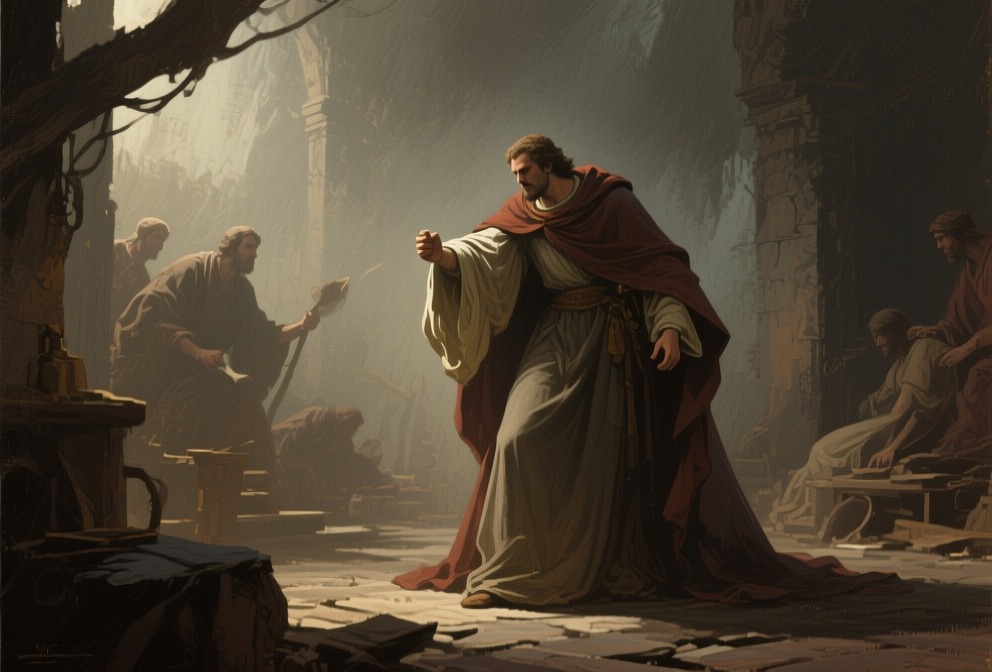
Dante and Virgil walk between the flaming tombs of the heretics. From one tomb, the voice of Farinata degli Uberti rises, standing erect with breast and front as if he held Hell in great despite. He asks Dante about his ancestors, and Dante reveals his Guelph lineage. Farinata boasts that he twice scattered the Guelphs. Dante retorts that the Guelphs returned both times, while the Ghibellines have not learned that art. Another shade, Cavalcante de' Cavalcanti, rises on his knees, anxiously asking about his son Guido. Dante's ambiguous answer—'he had'—leads Cavalcante to believe his son is dead, and he falls back in despair. Farinata continues, prophesying Dante's exile. He explains that the damned can see distant future events but not the present. Dante asks him to tell Cavalcante that his son is still alive. This episode contrasts the political pride of Farinata with the personal grief of Cavalcante, and introduces the theme of Dante's future exile.
Late evening, Good Friday 1300
The Seventh Circle: The Minotaur and the Centaurs
Dante and Virgil descend to the seventh circle, where the violent are punished. At the entrance, the Minotaur rages, biting itself, but Virgil taunts it and they pass. They see the river of blood, Phlegethon, where tyrants and murderers are boiled to various depths. Centaurs armed with arrows patrol the bank. Chiron, Nessus, and Pholus approach; Virgil explains that Dante is alive and guided by divine will. Chiron appoints Nessus to guide them. Nessus points out tyrants immersed in the blood: Alexander the Great, Dionysius, Ezzelino da Romano, and Obizzo d'Este. They continue to a shallower part of the river, where the Centaur points out Attila, Pyrrhus, and Sextus. This episode introduces the geography of the seventh circle and the punishment of the violent against their neighbors.
Late evening, Good Friday 1300
The Wood of the Suicides and Pier della Vigna
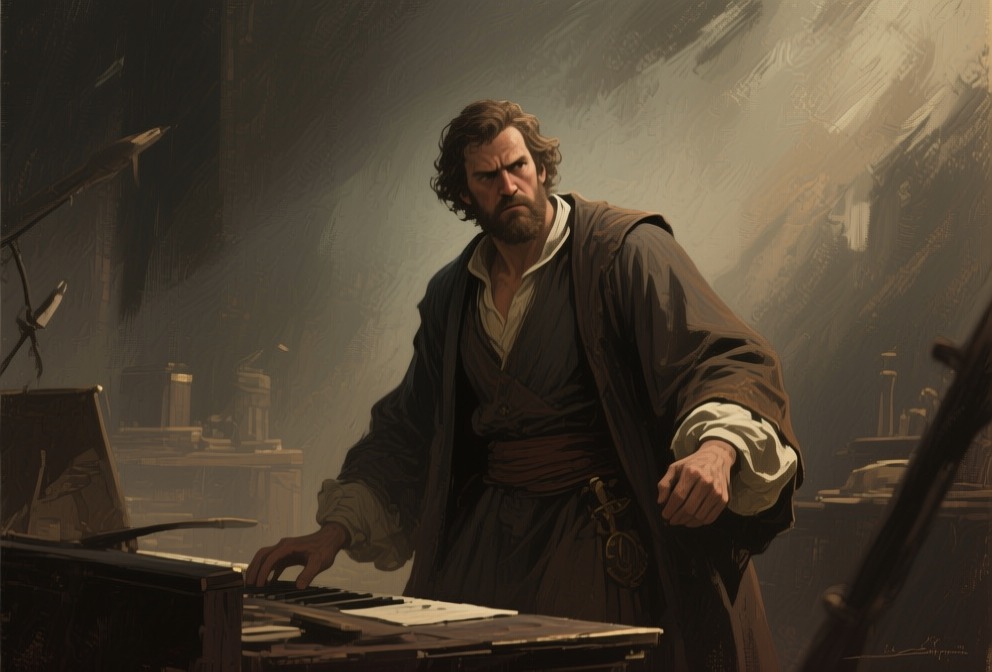
Dante and Virgil enter the Wood of Thorns, where the souls of the suicides are transformed into gnarled, poisonous trees. The Harpies nest in the branches, feeding on the leaves and causing pain. Virgil tells Dante to break a twig from a great thorn; when he does, the trunk cries out in pain and bleeds. The spirit within reveals himself as Pier della Vigna, the faithful chancellor of Frederick II, who was unjustly accused and committed suicide. He explains that envy at court inflamed the emperor against him, and he killed himself to escape disgrace. He describes how the souls of suicides are cast into the forest at random, where they sprout like seeds, and at the Last Judgment they will not reclaim their bodies but will hang from the trees. Two naked, scratched souls flee through the forest, pursued by black female mastiffs. One is Lano, the other Jacopo da Sant'Andrea; the dogs tear Jacopo apart. This episode powerfully dramatizes the sin of self-violence and the loss of the body.
Late evening, Good Friday 1300
The Burning Sands and Capaneus
Dante and Virgil emerge onto a plain of burning sand, where flakes of fire rain down endlessly. The souls of the violent against God, nature, and art are punished here. Some lie supine, some sit huddled, and some walk continually. Among them, the giant Capaneus lies disdainful, unheeding the fire, boasting that Jove's thunderbolts cannot give him joyous vengeance. Virgil rebukes him, saying his own rage is his greatest torment. They follow a little rivulet of blood that flows from the wood, its banks of stone providing a path. Virgil explains the origin of the infernal rivers: from a great old man in Crete, whose tears form Acheron, Styx, Phlegethon, and Cocytus. This episode introduces the figure of the Old Man of Crete, an allegory of the ages of humanity, and the concept of the rivers of Hell as the tears of human sin.
Late evening, Good Friday 1300
The Encounter with Brunetto Latini
Dante and Virgil walk along the stone bank of the rivulet, protected from the falling flames. They encounter a company of souls who gaze at them intently. One of them seizes Dante's garment and cries out in wonder; it is Brunetto Latini, Dante's former teacher. Dante expresses deep reverence and gratitude. Brunetto prophesies Dante's future glory and the hostility of the Florentines, comparing them to the blind, avaricious, envious people descended from Fiesole. He urges Dante to follow his star and cleanse himself of their customs. Brunetto names other notable sodomites among the crowd, including Priscian, Francis of Accorso, and a bishop transferred from Arno to Bacchiglione. He commends his Tesoro to Dante and departs, running like one who wins the green mantle at Verona. This episode is notable for its tender portrayal of Dante's affection for his teacher and the prophecy of his exile.
Late evening, Good Friday 1300
The Descent on Geryon
Dante and Virgil reach the waterfall that plunges into the eighth circle. Virgil commands Dante to untie a cord from around his waist and cast it into the abyss. A monstrous figure, Geryon, swims up from the depths—a creature with the face of a just man, the body of a serpent, and a scorpion's tail. Virgil speaks with Geryon while Dante visits the usurers on the sand, who sit with pouches around their necks bearing their family crests. Dante returns, and they mount Geryon's back. The monster descends slowly, wheeling through the air, and Dante is terrified. They land at the bottom of the eighth circle, Malebolge, and Geryon speeds away like an arrow. This episode marks the transition to the circle of fraud, and Geryon symbolizes the seductive and deceptive nature of fraud.
Late evening, Good Friday 1300
The First Bolgia: Seducers and Panders
Dante and Virgil enter Malebolge, a series of ten concentric ditches. In the first Bolgia, they see sinners walking in two opposing lines, lashed by horned demons. Dante recognizes Venedico Caccianimico, a Bolognese who pimped his own sister to the Marquis of Este. Venedico confesses his sin and notes that many Bolognese are here. A demon strikes him and tells him to move on. They cross to the next ridge and see the second line of sinners, among them Jason, who deceived Hypsipyle and Medea. Virgil explains Jason's sins. This episode introduces the punishment of the fraudulent: they are driven forever in opposite directions, beaten by demons, mirroring their manipulation of others in life.
Late evening, Good Friday 1300
The Second Bolgia: Flatterers
Dante and Virgil cross to the second Bolgia, where the flatterers are immersed in a stinking filth that seems to flow from human privies. The sinners are covered in ordure, and one of them, Alessio Interminei of Lucca, recognizes Dante and explains that his flatteries have submerged him here. Virgil points out Thais, the harlot, who scratches herself with filthy nails. This punishment is a fitting contrapasso for those who used their tongues to flatter and deceive: they are now immersed in the filth they spread.
Late evening, Good Friday 1300
The Third Bolgia: Simoniacs and Pope Nicholas III
Dante and Virgil descend to the third Bolgia, where the simoniacs are punished. They are thrust headfirst into round holes in the rock, with their feet protruding and burning with flames. Dante speaks to one who writhes more than the others, and the soul mistakes him for Pope Boniface VIII. The soul reveals himself as Pope Nicholas III, who confesses his simony and prophesies the coming of Boniface and then Clement V, who will be even worse. Dante delivers a fierce rebuke against corrupt prelates, comparing them to the whore of Babylon. Virgil carries Dante up to the next arch, pleased with his righteous anger. This episode is a powerful condemnation of the corruption of the Church and the sin of simony.
Late evening, Good Friday 1300
The Fourth Bolgia: Soothsayers
Dante and Virgil enter the fourth Bolgia, where the soothsayers, diviners, and astrologers are punished. Their heads are twisted backwards on their bodies, so that they must walk backwards, weeping, their tears falling on their buttocks. Dante weeps at the sight, but Virgil rebukes him, saying pity here is dead. He points out Amphiaraus, Tiresias, Aruns, and Manto, and tells the story of the founding of Mantua. Other soothsayers include Michael Scott, Guido Bonatti, and Asdente. This contrapasso punishes those who claimed to see the future by forcing them to see only behind them, their vision distorted.
Late evening, Good Friday 1300
The Fifth Bolgia: Barrators and the Malebranche
Dante and Virgil arrive at the fifth Bolgia, where the barrators (corrupt politicians) are immersed in boiling pitch. A black devil, Malacoda, appears carrying a sinner from Lucca on his shoulders and hurls him into the pitch. The devils, the Malebranche, taunt the sinner. Virgil negotiates with Malacoda, who sends a squad of ten devils to escort them to the next arch, falsely claiming the sixth arch is broken. The devils, with names like Alichino, Calcabrina, Cagnazzo, and Barbariccia, lead them along the bank. This episode introduces the grotesque comedy of the devils and sets up the deception that will lead to the travelers' escape.
Late evening, Good Friday 1300
The Escape from the Malebranche
Dante and Virgil follow the ten devils along the bank of the boiling pitch. The barrator Ciampolo of Navarre is fished out by Graffiacane and questioned. He tricks the devils by offering to whistle up more sinners, then dives back into the pitch. Two devils, Calcabrina and Alichino, fight and fall into the pitch themselves. In the confusion, Virgil and Dante escape. They descend into the sixth Bolgia, where the hypocrites are punished. This episode is a comic interlude that also demonstrates the folly of the devils and the providence that protects the travelers.
Late evening, Good Friday 1300
The Sixth Bolgia: Hypocrites and Caiaphas
Dante and Virgil enter the sixth Bolgia, where the hypocrites walk slowly, wearing gilded leaden cloaks that are dazzling on the outside but unbearably heavy within. Two of them, Catalano and Loderingo, Bolognese friars of the Frati Gaudenti, speak with Dante. They point out Caiaphas, the high priest who counseled the Pharisees to crucify Christ, who is himself crucified to the ground with three stakes, and trampled by the other hypocrites. Virgil asks for directions, and Catalano tells them of a broken bridge. Virgil is angry, realizing Malacoda lied about the sixth arch being intact. This episode condemns religious hypocrisy and the abuse of authority.
Late evening, Good Friday 1300
The Seventh Bolgia: Thieves and Vanni Fucci
Dante and Virgil climb to the seventh Bolgia, where the thieves are tormented by serpents. The sinners run naked and terrified, their hands bound with serpents. A serpent transfixes Vanni Fucci at the neck; he burns to ashes and then regenerates, like a phoenix. Vanni Fucci, a bestial man from Pistoia, confesses to stealing the sacristy's ornaments and falsely accusing another. He prophesies the defeat of the Bianchi at Campo Piceno, intending to give Dante pain. This episode introduces the theme of metamorphosis and the contrapasso of the thieves: their sin of taking what is not theirs is punished by the constant theft of their own forms.
Late evening, Good Friday 1300
The Metamorphoses of the Thieves
After Vanni Fucci's blasphemy, a Centaur named Cacus appears, covered in serpents. Three Florentine thieves—Agnello Brunelleschi, Buoso degli Abati, and Puccio Sciancato—arrive. A six-footed serpent fastens onto Agnello, and they merge into a single monstrous form. Another serpent, Cianfa de' Donati, transfixes Buoso, and they exchange forms: the serpent becomes human and the human becomes a serpent. Puccio alone remains unchanged. Dante witnesses these grotesque transformations, which surpass the myths of Ovid and Lucan. This episode is a tour de force of poetic invention, illustrating the complete loss of identity that accompanies the sin of theft.
Late evening, Good Friday 1300
The Eighth Bolgia: Evil Counsellors and Ulysses
Dante and Virgil ascend to the eighth Bolgia, where the evil counsellors are hidden within tongues of flame. Each flame contains a sinner who used his intellect to deceive. Virgil points out a double flame containing Ulysses and Diomed, who are punished together for the ambush of the Trojan horse, the deception of Achilles, and the theft of the Palladium. At Dante's request, Virgil speaks to them, and the greater horn of the flame tells the story of Ulysses' last voyage: how he and his crew sailed beyond the Pillars of Hercules, driven by the desire for knowledge and virtue, until they sighted a great mountain and were sunk by a whirlwind. This episode is one of the most celebrated in the poem, exploring the limits of human reason and the tragic consequences of overreaching.
Late evening, Good Friday 1300
Guido da Montefeltro's Deception by Pope Boniface VIII
Another flame approaches, and from it speaks Guido da Montefeltro, a former Ghibelline leader who became a Franciscan friar. He tells how Pope Boniface VIII, needing advice to capture Palestrina, absolved him in advance for the sin of giving fraudulent counsel. Guido advised 'long promise, short fulfilment,' and was damned when a black cherub argued that absolution without repentance is impossible. Minos sent him to the eighth Bolgia. This episode condemns the corruption of the papacy and the misuse of the power of the keys, and explores the theme of false counsel.
Late evening, Good Friday 1300
The Ninth Bolgia: Schismatics and Mahomet
Dante and Virgil descend to the ninth Bolgia, where the sowers of discord are horribly mutilated by a devil with a sword. Mahomet is split from chin to groin, his entrails hanging; he explains that he and Ali are punished for causing schism. He warns Dante to warn Fra Dolcino to prepare for the crusade against him. Pier da Medicina, with his throat pierced, prophesies the betrayal of two men of Fano by Malatestino. Curio, with his tongue slit, is pointed out for his advice to Caesar to cross the Rubicon. Mosca, with his hands severed, laments his advice that 'a thing done has an end,' which led to the Guelph-Ghibelline conflict. Bertrand de Born carries his own severed head like a lantern, punished for setting father against son. This episode is a gruesome catalogue of the consequences of division and schism.
Late evening, Good Friday 1300
The Tenth Bolgia: Falsifiers and Master Adam
Dante and Virgil enter the tenth and final Bolgia of Malebolge, where the falsifiers are punished with various diseases. The alchemists are covered with scabs; among them are Griffolino d'Arezzo and Capocchino. Two raving shades, Gianni Schicchi and Myrrha, run biting others. The falsifier of coin, Master Adam of Brescia, lies with dropsy, tormented by thirst. He tells how he counterfeited the florin at Romena, and names his accomplices. He quarrels with Sinon of Troy, the false witness, who lies nearby with a fever. Virgil rebukes Dante for listening to their petty dispute. This episode concludes the catalogue of fraud with a vivid depiction of the physical and moral degradation of the falsifiers.
Late evening, Good Friday 1300
The Giants and Antaeus
Dante and Virgil leave Malebolge and approach the well of Cocytus, the ninth circle. They see the giants, who stand like towers around the rim. Nimrod babbles incomprehensibly; Ephialtes, bound in chains, shakes himself in rage. Virgil speaks to Antaeus, who is unbound and can speak, asking him to lower them to the bottom of Cocytus. Antaeus takes them in his hands and places them gently on the frozen lake. This episode marks the transition to the circle of treachery, and the giants symbolize the pride and rebellion that led to the fall of Lucifer.
Late evening, Good Friday 1300
The Ninth Circle: Cocytus and the Traitors
Dante and Virgil find themselves on the frozen lake of Cocytus, where the traitors are immersed in the ice. In the first ring, Caina, traitors to their kindred are frozen up to their faces. Dante sees two brothers, Alessandro and Napoleone degli Alberti, butting each other like goats. Camicion de' Pazzi names himself and others. In the second ring, Antenora, traitors to their country are frozen more deeply. Dante accidentally kicks the face of Bocca degli Abati, who at first refuses to name himself. Dante pulls his hair until another traitor names him. Bocca names other traitors: Buoso da Duera, Beccaria, Gianni del Soldanier, Ganelon, and Tebaldello. This episode introduces the frozen landscape of the lowest Hell and the increasing coldness of the traitors' hearts.
Late evening, Good Friday 1300
The Story of Count Ugolino
In Antenora, Dante sees two souls frozen in one hole, the upper gnawing the skull of the lower. The upper soul is Count Ugolino, who tells the story of his imprisonment and starvation with his sons and grandsons in the Tower of Famine. He describes how Archbishop Ruggieri, whom he is now devouring, imprisoned them and had the door nailed shut. Over days, his sons died one by one, and finally, blind and desperate, Ugolino died of hunger. His story is a harrowing account of betrayal and inhuman cruelty. Dante then curses Pisa for its barbarity. This episode is one of the most powerful in the Inferno, exploring the depths of human suffering and the desire for vengeance.
Late evening, Good Friday 1300
Ptolomaea and Friar Alberigo
Dante and Virgil pass into Ptolomaea, where traitors to their guests are punished. The souls lie supine in the ice, their tears frozen in their eyes, preventing them from weeping. Friar Alberigo, who murdered his guests at a banquet, asks Dante to remove the ice from his eyes. He explains that in Ptolomaea, the soul descends to Hell as soon as the betrayal is committed, while a demon inhabits the body on earth. He names Branca d'Oria, who is still alive on earth but whose soul is already in Hell. Dante refuses to open Alberigo's eyes, an act of 'courteous rudeness.' This episode introduces the chilling concept that some souls are damned before their physical death.
Late evening, Good Friday 1300
The Encounter with Lucifer
Dante and Virgil enter the final ring, Judecca, where traitors to their lords and benefactors are completely encased in ice. They see Lucifer, the Emperor of the dolorous kingdom, emerging from the ice from his mid-breast. He has three faces: one vermilion, one between white and yellow, and one black. Under each face come two mighty bat-like wings, which beat and freeze Cocytus. In each of his three mouths, he chews a sinner: Judas Iscariot, with his head inside and legs kicking; Brutus; and Cassius. Virgil explains that Judas suffers the greatest pain. They then climb down Lucifer's shaggy sides, passing through the center of the earth, and emerge to see the stars. This is the climax of the Inferno, the confrontation with the source of all evil, and the beginning of the ascent to Purgatory.
Early morning, Holy Saturday 1300
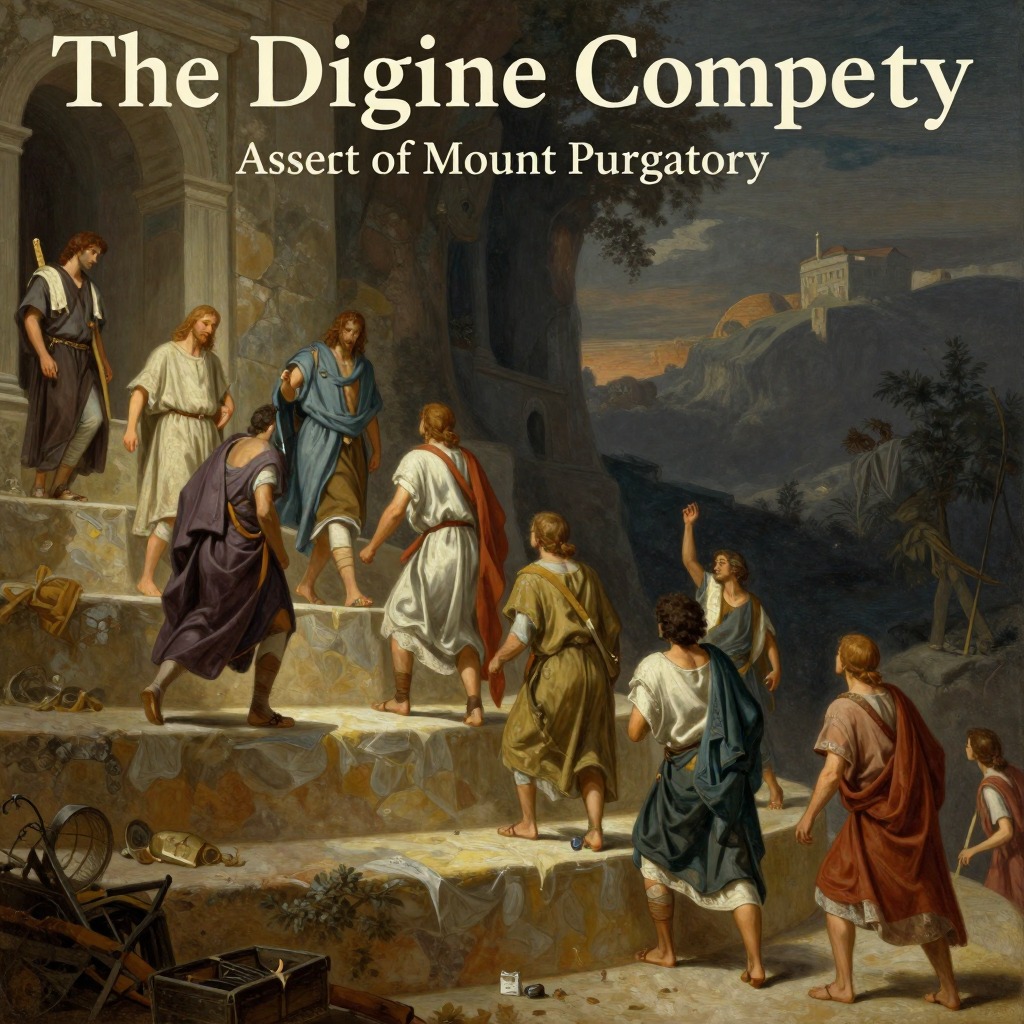
The Ascent from Hell and Arrival at Purgatory
Dante and Virgil climb down Lucifer's body, passing through the center of the earth. When they reach the point where the thigh revolves, Virgil turns around and they begin to ascend. They emerge through a natural dungeon into the southern hemisphere, where they see the stars. They are now at the base of Mount Purgatory. Virgil explains the geography: they have passed the center of gravity and are now in the opposite hemisphere. The time is just before dawn on Holy Saturday. This moment marks the transition from the realm of eternal damnation to the realm of purgation and hope.
Dawn, Holy Saturday 1300
The Arrival at Purgatory and Cato of Utica
Dante and Virgil emerge on the shore of Mount Purgatory. The sky is clear and sapphire, and Venus shines in the east. Dante sees four stars never seen before except by the primal people. An old man with a long beard, Cato of Utica, appears and questions them, demanding to know how they escaped Hell. Virgil explains that a Lady from Heaven sent him to guide Dante, and that Dante seeks liberty. Cato, moved by the mention of his wife Marcia, grants them passage but instructs Virgil to gird Dante with a smooth rush and wash his face to remove the stains of Hell. He points to the shore where rushes grow. This encounter establishes Cato as the guardian of Purgatory, a symbol of political and spiritual liberty.
Dawn, Holy Saturday 1300
The Washing and Girding with Rush
Following Cato's instructions, Virgil leads Dante to the shore where the dew fights with the sun. Virgil washes Dante's face with the dew, removing the stains of Hell. He then girds Dante with a humble rush, which immediately springs up again when plucked. This ritual symbolizes the cleansing of sin and the humility required for the journey of purification. The rush, which bends with the waves, represents the virtue of humility, the foundation of the penitent life.
Dawn, Holy Saturday 1300
The Angel Boat and Casella
Dante and Virgil see a light approaching swiftly across the sea. It is an angel, the Celestial Pilot, who ferries souls to Purgatory in a small, swift vessel. The souls on board sing 'In exitu Israel de Aegypto.' The angel makes the sign of the cross, and the souls disembark. Among them, Dante recognizes his friend Casella, a musician. Dante tries to embrace him but his arms pass through the empty shade. Casella explains that he has been delayed by the angel but has now been received. At Dante's request, Casella sings 'Love, that within my mind discourses with me,' which soothes all present. Cato suddenly appears and rebukes them for lingering, urging them to run to the mountain to strip off the slough. This episode combines the joy of reunion with the urgency of the penitential journey.
Morning, Holy Saturday 1300
The Encounter with Manfredi
Dante and Virgil begin to climb the mountain but find the rock too steep. They encounter a group of souls moving slowly, who are the late repentant. One of them, Manfredi, the son of Frederick II, speaks to Dante. He is blond and handsome, with a wound on his brow and breast. He explains that he died excommunicated but repented at the last moment, and though his body was disinterred by the Bishop of Cosenza, he is saved by God's infinite mercy. He asks Dante to tell his daughter Costanza of his salvation and the need for prayers to shorten his time in Ante-Purgatory. This episode emphasizes the power of repentance and the efficacy of prayers for the dead.
Morning, Holy Saturday 1300
The Negligent and Belacqua
Dante and Virgil continue climbing through a narrow cleft in the rock. They emerge on a terrace where they see souls sitting in the shade of a great rock. One of them, Belacqua, sits with his knees drawn up, too lazy to climb. Dante recognizes him and is surprised to find him here rather than in Hell. Belacqua explains that he must wait outside Purgatory for as long as he delayed repentance in life, unless aided by prayers. This episode introduces the concept of Ante-Purgatory and the punishment of the negligent, who must wait before beginning their purgation.
Morning, Holy Saturday 1300
The Violently Slain: Buonconte and La Pia
Dante and Virgil encounter a group of souls who died by violence but repented at the last moment. They sing the Miserere. One of them, Buonconte di Montefeltro, tells how he was wounded in the throat at Campaldino and died fleeing, but was saved by a single tear of repentance. He describes how a demon and an angel fought for his soul, and how the demon caused a storm that swept his body into the Arno. Another soul, La Pia, asks Dante to remember her: she was from Siena and was killed in Maremma by her husband. This episode emphasizes the power of even the smallest act of repentance to save a soul.
Morning, Holy Saturday 1300
The Meeting with Sordello
Dante and Virgil continue their ascent and encounter a solitary soul, Sordello of Mantua. When Virgil reveals that he is also a Mantuan, Sordello embraces him with joy. Dante then delivers a passionate invective against Italy, lamenting its political divisions and the neglect of the Emperor Albert. He contrasts the noble love of country shown by Sordello with the corruption and strife of contemporary Italy. Sordello then offers to guide them to a place where they can rest for the night. This episode is a powerful expression of Dante's political ideals and his longing for a unified Italy.
Evening, Holy Saturday 1300
The Valley of the Princes
Sordello leads Dante and Virgil to a beautiful valley filled with flowers and fragrant herbs, where the souls of negligent princes are gathered. They sing 'Salve Regina.' Sordello points out the various rulers: Rudolph of Habsburg, Ottocar of Bohemia, Philip III of France, Henry I of Navarre, Peter III of Aragon, Charles I of Anjou, Henry III of England, and William VII of Montferrat. These princes were negligent in their duties and are now waiting in the valley. This episode provides a panoramic view of European politics and Dante's judgments on contemporary rulers.
Night, Holy Saturday 1300
The Guardian Angels and the Serpent
As night falls, the souls in the valley sing the hymn 'Te lucis ante.' Two angels descend with flaming swords, truncated at the points, and take up positions on either side of the valley. Sordello explains that they are guardians against the serpent that will come. Dante sees a serpent slither through the grass, but the angels drive it away. Nino di Gallura, a judge, recognizes Dante and asks him to tell his daughter Giovanna to pray for him. He laments that his wife remarried. Currado Malaspina speaks with Dante, and Dante praises the Malaspina family. This episode introduces the theme of spiritual warfare and the protection of divine grace.
Night, Holy Saturday 1300
Dante's Dream of the Eagle and the Gate of Purgatory
Dante falls asleep on the grass and dreams of being snatched up by a golden eagle into the sphere of fire. He awakens to find himself at the Gate of Purgatory, with Virgil explaining that Saint Lucia carried him there while he slept. The gate is approached by three steps: white marble, dark cracked stone, and porphyry. An angel with a naked sword sits on the threshold. Virgil asks the angel to open the gate. The angel inscribes seven P's (for peccata, sins) on Dante's forehead with the point of his sword, then uses two keys—gold and silver—to unlock the gate. He warns that whoever looks back must return. The gate opens with a thunderous sound, and Dante hears the 'Te Deum.' This episode marks the formal entry into Purgatory proper.
Morning, Easter Sunday 1300
The First Terrace: The Proud
Dante and Virgil enter the first terrace of Purgatory, where the proud are purged. The terrace is paved with white marble adorned with sculptures depicting examples of humility: the Annunciation, David dancing before the Ark, and Emperor Trajan and the widow. The souls of the proud walk bent under heavy stones, their faces to the ground. They recite the 'Our Father.' Dante speaks with Omberto di Santafiore, who was brought low by pride, and Oderisi d'Agobbio, an illuminator who laments the vanity of earthly fame. Oderisi points out Provenzan Salvani, who humbled himself to ransom a friend. This terrace teaches the lesson of humility through art and example.
Morning, Easter Sunday 1300
The Second Terrace: The Envious
Dante and Virgil ascend to the second terrace, where the envious are purged. Their eyes are sewn shut with iron wire, and they wear coarse sackcloth. They lean on each other for support and sit against the bank. Voices in the air cry out examples of charity and generosity. Dante speaks with Sapia of Siena, who confesses her envy and her joy at the defeat of her fellow citizens. She explains that she was saved by the prayers of Pier Pettignano. She asks Dante to restore her good name among her kin. This terrace emphasizes the blindness of envy and the need for charity.
Morning, Easter Sunday 1300
The Third Terrace: The Wrathful
Dante and Virgil ascend to the third terrace, where the wrathful are purged in a dense, acrid smoke that blinds and chokes them. They hear voices reciting the 'Agnus Dei' and examples of meekness. Dante speaks with Marco Lombardo, who explains the nature of free will and the corruption of the world. He laments that the Church has confused spiritual and temporal power, leading to the decline of virtue. He names three old men who still embody the old virtues: Currado da Palazzo, Gherardo da Camino, and Guido da Castello. This terrace explores the nature of anger and the importance of self-control.
Morning, Easter Sunday 1300
The Fourth Terrace: The Slothful
Dante and Virgil ascend to the fourth terrace, where the slothful are purged. The souls run with great haste, crying out examples of zeal and condemning sloth. Two groups run in opposite directions, shouting encouragement. The Abbot of San Zeno speaks to them, lamenting the corruption of his monastery. Virgil explains the nature of love and the different forms of sin that arise from misdirected or insufficient love. Dante falls into a reverie and then into a dream. This terrace emphasizes the need for spiritual diligence and the proper direction of love.
Morning, Easter Sunday 1300
The Fifth Terrace: The Avaricious and Prodigal
Dante and Virgil ascend to the fifth terrace, where the avaricious and prodigal are purged. The souls lie prostrate on the ground, weeping and reciting 'Adhaesit pavimento anima mea.' Dante speaks with Pope Adrian V, who confesses his avarice and explains that he converted only after becoming pope. He asks Dante to pray for his niece Alagia. Another soul, Hugh Capet, recounts the history of the Capetian dynasty, condemning the greed and violence of his descendants. He prophesies the coming of a new Charles who will oppress Florence. An earthquake shakes the mountain, and the souls cry 'Gloria in excelsis Deo.' This terrace condemns the love of money and the abuse of power.
Morning, Easter Sunday 1300
The Earthquake in Purgatory and the Meeting with Statius
The earthquake that shook the mountain is explained by the soul of Statius, the Roman poet, who has just completed his purgation and is now free to ascend to Heaven. He explains that the mountain trembles whenever a soul feels itself pure and ready to ascend. Statius has been on the terrace of avarice for over five hundred years. He expresses his deep admiration for Virgil, whose Aeneid inspired him to become a poet and a Christian. Statius joins Dante and Virgil on their journey. This episode celebrates the power of poetry and the grace of conversion.
Morning, Easter Sunday 1300
The Sixth Terrace: The Gluttonous
Dante, Virgil, and Statius ascend to the sixth terrace, where the gluttonous are purged. The souls are emaciated, their eyes hollow and skin stretched over bones. They are tormented by the sight and smell of a fruit tree and a fountain of water that they cannot reach. Dante recognizes Forese Donati, a friend from his youth. Forese explains that he was saved by the prayers of his wife Nella, and he condemns the immodest dress of Florentine women. He prophesies that they will be punished. Dante tells Forese of his journey and introduces Virgil and Statius. This terrace emphasizes the virtue of temperance and the power of intercessory prayer.
Morning, Easter Sunday 1300
The Seventh Terrace: The Lustful
Dante, Virgil, and Statius ascend to the seventh and final terrace, where the lustful are purged by walking through a wall of fire. The souls sing hymns and cry out examples of chastity. Dante is terrified of the fire, but Virgil encourages him by reminding him that Beatrice awaits on the other side. Dante enters the fire and passes through, emerging on the stairway to the Earthly Paradise. They climb until nightfall and then sleep on the steps. Dante dreams of Leah and Rachel, symbols of the active and contemplative life. This terrace represents the final purification of the soul before entering Paradise.
Morning, Easter Monday 1300
The Earthly Paradise and Matilda
Dante, Virgil, and Statius enter the Earthly Paradise at the summit of Mount Purgatory. The forest is dense and living-green, and a gentle breeze rustles the leaves. A stream, Lethe, blocks their path. On the other side, a beautiful lady, Matilda, is gathering flowers and singing. She explains the nature of the Earthly Paradise and the origin of the rivers Lethe and Eunoe. She tells Dante that this place was created for innocent humanity and that the air and water here are free from the corruption of the fallen world. This episode presents the Earthly Paradise as a restoration of the Garden of Eden.
Morning, Easter Monday 1300
The Procession of the Church and the Griffin
Dante witnesses a magnificent procession on the other side of Lethe. Seven golden candlesticks lead the way, followed by twenty-four elders crowned with lilies, representing the books of the Old Testament. Then come four animals with six wings each, representing the Evangelists. Between them is a triumphal chariot drawn by a Griffin, symbolizing Christ. Three maidens dance at the right wheel (the theological virtues), and four at the left (the cardinal virtues). Two old men follow, then four humble ones, and finally an old man with a sharp sword. The procession halts before Dante. This elaborate allegory represents the history of the Church and the revelation of Scripture.
Morning, Easter Monday 1300
The Appearance of Beatrice and Dante's Confession
The procession stops, and Beatrice appears on the chariot, veiled and crowned with olive. Dante, overcome with the memory of his love, turns to Virgil for comfort but finds him gone. Beatrice calls Dante by name and rebukes him for his sins after her death. She demands that he confess his infidelity to her. Dante, weeping, confesses that the false pleasures of the world led him astray. Beatrice then allows him to drink from Lethe, which erases the memory of sin. The four cardinal virtues lead him to Beatrice's eyes, where he sees the Griffin reflected. This episode is the emotional climax of the Purgatorio, marking the transition from Virgil's guidance to Beatrice's.
Morning, Easter Monday 1300
The Allegory of the Chariot and the Tree of Knowledge
Beatrice and the procession move to the Tree of Knowledge, which is bare. The Griffin ties the chariot to the tree, which blossoms anew. Dante falls asleep and awakens to find Beatrice seated beneath the tree. She tells him to watch the chariot, which undergoes a series of transformations: an eagle descends and strikes it, a fox leaps into it, the eagle returns and leaves its feathers, a dragon emerges from the earth and steals part of the chariot, and the chariot grows monstrous heads. A whore and a giant appear, and the giant drags the chariot away. Beatrice explains that these events symbolize the corruption of the Church. This allegory is a powerful critique of the historical abuses of the papacy.
Morning, Easter Monday 1300
The Passage of Lethe and Eunoe
Beatrice prophesies the coming of a savior who will restore the Church. She then instructs Matilda to lead Dante to the river Eunoe, which restores the memory of good deeds. Dante drinks from Eunoe and emerges 'pure and disposed to mount unto the stars.' This completes his purification and prepares him for the ascent to Paradise. The Purgatorio ends with Dante ready to ascend to the heavens.
Noon, Easter Monday 1300
The Ascent to the First Heaven and Beatrice's Discourse on Order
Dante and Beatrice ascend to the First Heaven, the Moon. Dante is confused by his ability to rise through the air, and Beatrice explains the divine order of the universe: all things are drawn toward God by love, and Dante's ascent is as natural as a river flowing downhill. She explains that the universe is ordered by Providence, and that the blessed souls are arranged in different spheres according to their capacity for grace. This discourse establishes the metaphysical framework of the Paradiso.
Noon, Easter Monday 1300
The Encounter with Piccarda Donati and the Empress Constance
In the sphere of the Moon, Dante sees faint, translucent faces. These are the souls of those who were forced to break their religious vows. Piccarda Donati, a nun who was forcibly removed from her convent, explains that she and the others are content with their lowly station because their will is perfectly aligned with God's. She introduces the Empress Constance, who was also forced to break her vows. Piccarda explains that the blessed desire only what they have, and that 'in His will is our peace.' This episode introduces the theme of the hierarchy of blessedness and the perfection of the divine will.
Noon, Easter Monday 1300
The Encounter with Justinian and the Roman Eagle
Dante and Beatrice ascend to the sphere of Mercury, where the souls of those who sought fame and honor appear as bright lights. The Emperor Justinian speaks, recounting the history of the Roman Eagle from Aeneas to Charlemagne. He explains that he was a heretic until Pope Agapetus corrected him, and that he then codified Roman law. He condemns both the Guelphs and Ghibellines for misusing the imperial standard. He then introduces the soul of Romeo, a humble pilgrim who served Count Raymond Berenger faithfully but was unjustly accused. This episode celebrates the ideal of the Roman Empire and condemns the political factions of Dante's time.
Noon, Easter Monday 1300
The Encounter with Charles Martel and Cunizza da Romano
Dante and Beatrice ascend to the sphere of Venus, where the souls of lovers appear. Charles Martel, the son of Charles II of Anjou, speaks with Dante. He explains that different natures are suited to different roles in society, and that the diversity of talents is part of God's plan. He laments that his brother Robert has misruled his kingdom. Another soul, Cunizza da Romano, speaks of her past sins and her present joy in God's will. Folco of Marseilles, a former troubadour, recounts his sinful past and then praises Rahab, the harlot of Jericho, who was saved by her faith. He condemns the corruption of the Church and the neglect of the Holy Land. This episode explores the themes of divine providence and the redemption of sinners.
Noon, Easter Monday 1300
The Circle of the Sun and the Life of St. Francis (by Thomas Aquinas)
Dante and Beatrice ascend to the sphere of the Sun, where the souls of the wise and learned appear as a radiant circle. St. Thomas Aquinas, a Dominican, speaks and identifies the souls in the circle: Albertus Magnus, Gratian, Peter Lombard, Solomon, Dionysius the Areopagite, Orosius, Boethius, Isidore, Bede, Richard of St. Victor, and Siger of Brabant. Thomas then recounts the life of St. Francis of Assisi, praising his poverty and his union with Lady Poverty. He laments the corruption of the Dominican Order, which has strayed from its founder's ideals. This episode celebrates the ideal of evangelical poverty and the founding of the Franciscan Order.
Noon, Easter Monday 1300
The Circle of the Sun and the Life of St. Dominic (by Bonaventure)
A second circle of lights appears, and St. Bonaventure, a Franciscan, speaks. He recounts the life of St. Dominic, praising his learning and his zeal against heresy. He laments the corruption of the Franciscan Order. He then identifies the souls in his circle: Illuminato, Agostino, Hugh of St. Victor, Peter Mangiador, Peter of Spain, Nathan, Chrysostom, Anselm, Donatus, Rabanus, and Joachim of Fiore. This episode complements the previous one, celebrating the ideal of learned preaching and the founding of the Dominican Order.
Noon, Easter Monday 1300
The Encounter with Cacciaguida and Prophecy of Banishment
Dante and Beatrice ascend to the sphere of Mars, where the souls of martyrs and crusaders form a cross. A soul descends from the cross and speaks to Dante; it is his great-great-grandfather, Cacciaguida. Cacciaguida describes the simple and virtuous life of old Florence and recounts his own life: he was baptized in the Baptistery, married a woman from the Po valley, followed Emperor Conrad on crusade, and was killed by the Saracens. He prophesies Dante's exile from Florence, describing the bitterness of another's bread and the difficulty of another's stairs. He names Dante's first refuge as the court of Bartolomeo della Scala in Verona. This episode is the emotional heart of the Paradiso, connecting Dante's personal destiny with the history of Florence.
Noon, Easter Monday 1300
The Eagle of Justice and the Righteous Kings
Dante and Beatrice ascend to the sphere of Jupiter, where the souls of just rulers form the shape of an eagle. The eagle speaks with a single voice, explaining the mystery of divine justice. It addresses Dante's doubt about the salvation of those who lived without knowledge of Christ, and affirms that God's justice is beyond human comprehension. The eagle then names the righteous kings who form its eye and brow: David, Trajan, Hezekiah, Constantine, William II of Sicily, and Ripheus the Trojan. It condemns the corrupt Christian kings of Dante's time. This episode explores the theme of divine justice and the salvation of the virtuous pagan.
Noon, Easter Monday 1300
The Encounter with Peter Damiano and the Contemplatives
Dante and Beatrice ascend to the sphere of Saturn, where the souls of contemplatives appear as a golden ladder. St. Peter Damiano descends and speaks with Dante. He explains that he was a contemplative monk who was forced to become a cardinal, and he condemns the luxury of the modern clergy. He tells Dante that the mystery of predestination is beyond the comprehension of even the highest angels. Other souls descend the ladder, and their cry is so loud that Dante is overwhelmed. This episode emphasizes the value of the contemplative life and the limits of human understanding.
Noon, Easter Monday 1300
The Examination of Dante on Faith, Hope, and Charity
Dante and Beatrice ascend to the sphere of the Fixed Stars, where they see the triumph of Christ and the Virgin Mary. St. Peter examines Dante on faith, and Dante gives a definition of faith based on St. Paul. St. James examines him on hope, and Dante defines hope as the certain expectation of future glory. St. John examines him on charity, and Dante declares that his love for God is based on the goodness of God himself. Adam then appears and answers Dante's questions about his creation, his sin, and the language he spoke. This episode is a formal examination of the theological virtues, confirming Dante's readiness for the Beatific Vision.
Noon, Easter Monday 1300
The Vision of the Empyrean and the Rose of Paradise
Dante and Beatrice ascend to the Primum Mobile, the ninth heaven, and then to the Empyrean, the tenth heaven, which is pure light. Dante sees a river of light that transforms into a vast white rose, the Rose of Paradise. The souls of the blessed are seated on petals of the rose, and angels fly between them like bees. Beatrice points out the empty throne awaiting Emperor Henry VII. She condemns the corruption of the papacy and the greed of the clergy. This vision is the culmination of the Paradiso, the final revelation of the heavenly kingdom.
Noon, Easter Monday 1300
The Departure of Beatrice and the Intercession of St. Bernard
Dante looks for Beatrice but finds St. Bernard of Clairvaux in her place. Bernard explains that Beatrice has returned to her throne in the rose, and that he will guide Dante in the final stage of his journey. Bernard points out the Virgin Mary, the Queen of Heaven, and the great saints: Adam, St. Peter, St. John the Baptist, St. Francis, St. Benedict, and St. Augustine. He explains the arrangement of the rose, with the souls of those who believed in Christ to come on one side and those who believed in Christ already come on the other. This episode marks the transition from Beatrice's guidance to Bernard's, as Dante prepares for the final vision of God.
Noon, Easter Monday 1300
The Final Vision of God
St. Bernard prays to the Virgin Mary to intercede for Dante, asking that he may be granted the power to see God. Mary grants the prayer, and Dante's vision is purified. He sees the Eternal Light, which is a single, simple light containing the entire universe bound together by love. Within the light, he sees three circles of three colors and one dimension, representing the Trinity. He attempts to understand how the human image fits into the second circle, but his own wings are not enough. A flash of lightning grants his wish, and his desire and will are turned by the Love that moves the sun and the other stars. This is the final vision of the poem, the Beatific Vision, in which Dante achieves union with God.